A way into your inner world
Conscious Connected Breathwork (CCB) is an active breathing technique where inhale and exhale flow into one another without a pause. The continuous rhythm can connect you more deeply with your inner world.
That might mean feeling emotions more fully and giving them space to move, noticing the body in a new way, gaining insight, experiencing altered states of consciousness or simply becoming very relaxed.
What can unfold
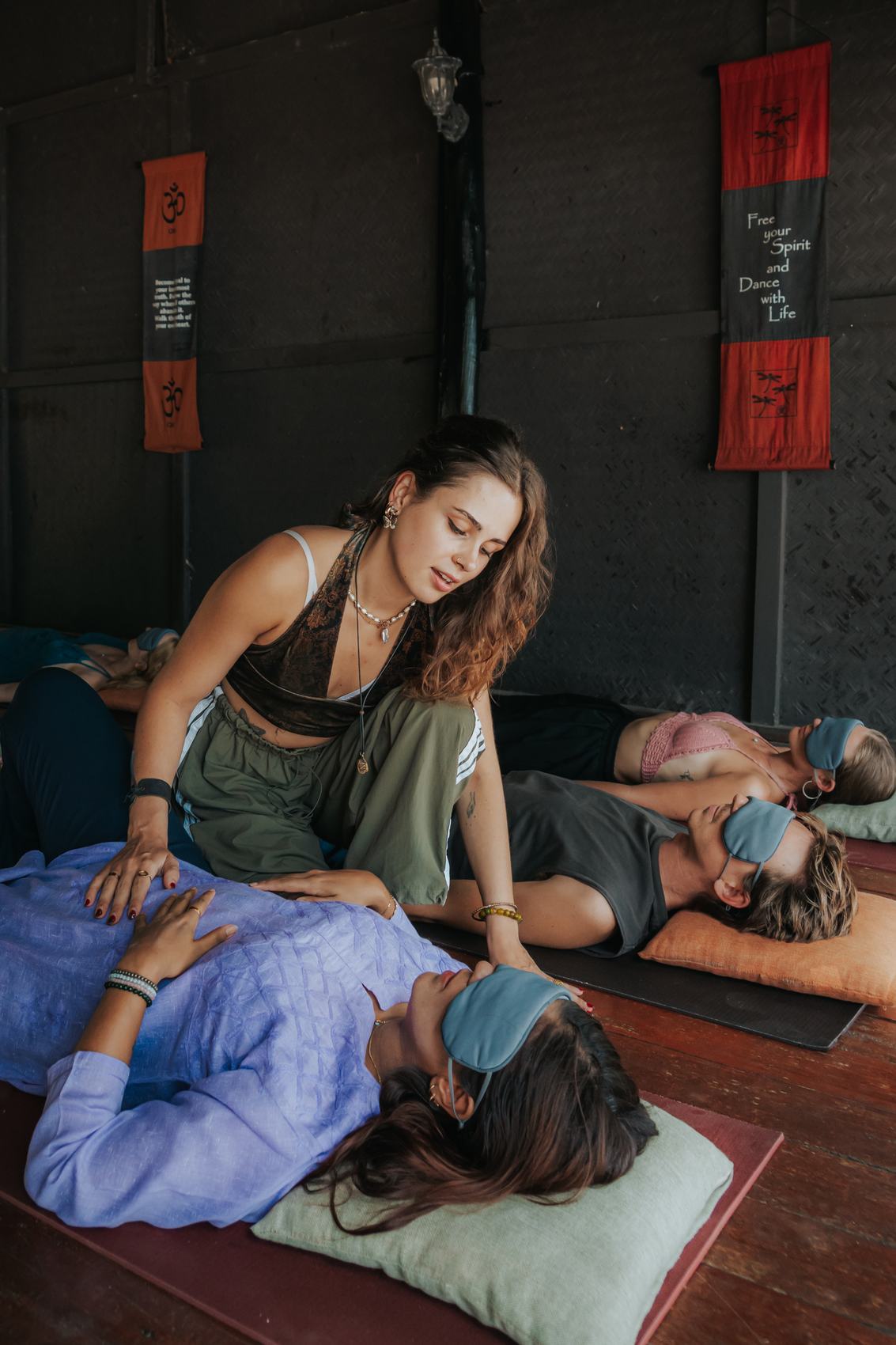
Conscious Connected Breathwork can look like simply lying on a mat, while internally an entire world is moving.
For me, it can mean staying with emotions that have been waiting to be felt, letting grief or discomfort move through the body, and allowing sensations to arise and pass without immediately trying to change them.
It can become a practice of introspection and simply being with what is. Less holding on, less pushing away. Sometimes that brings clarity, softness, laughter or a deeper sense of connection. Sometimes it simply brings you back into the present moment and out of the constant stream of thought.
And still, there is no particular experience to chase. Breathwork can be a bit of a mystery box. You never quite know what is going to unfold.
What it can feel like
- Tingling, light-headedness or changes in body sensation
- Warmth, trembling, muscle tension or movement
- Tears, laughter, anger, grief, joy or the urge to make sound
- Images, memories, insight or unexpected thoughts
- Changes in your sense of time, space or body
- Aliveness, openness, deep rest or a dreamlike state
- Or not much at all

A little theory behind the breath
Conscious breathing is anything but new. Intentional breath practices have deep roots in yogic traditions such as pranayama and can also be found across other contemplative traditions. Modern approaches emerged much later, beginning with Leonard Orr’s development of Rebirthing in the 1960s, followed by Stanislav and Christina Grof’s Holotropic Breathwork around 1975. Both became influential in shaping the practices we know today.
Physiologically, when breathing becomes deep or fast enough that ventilation exceeds what the body currently needs, more carbon dioxide is breathed out than the body is producing. CO₂ levels can fall, temporarily affecting blood pH, cerebral blood flow and nervous system activity. These changes can contribute to some of the sensations people experience during breathwork, such as tingling, light-headedness, muscle tension, changes in body perception and shifts in consciousness.
Read more: CO₂, the brain and altered states →The session itself
Come in comfortable clothes you can breathe freely in and try to avoid a heavy meal for around two hours beforehand. If you can, leave some space after the session rather than rushing into the next appointment.
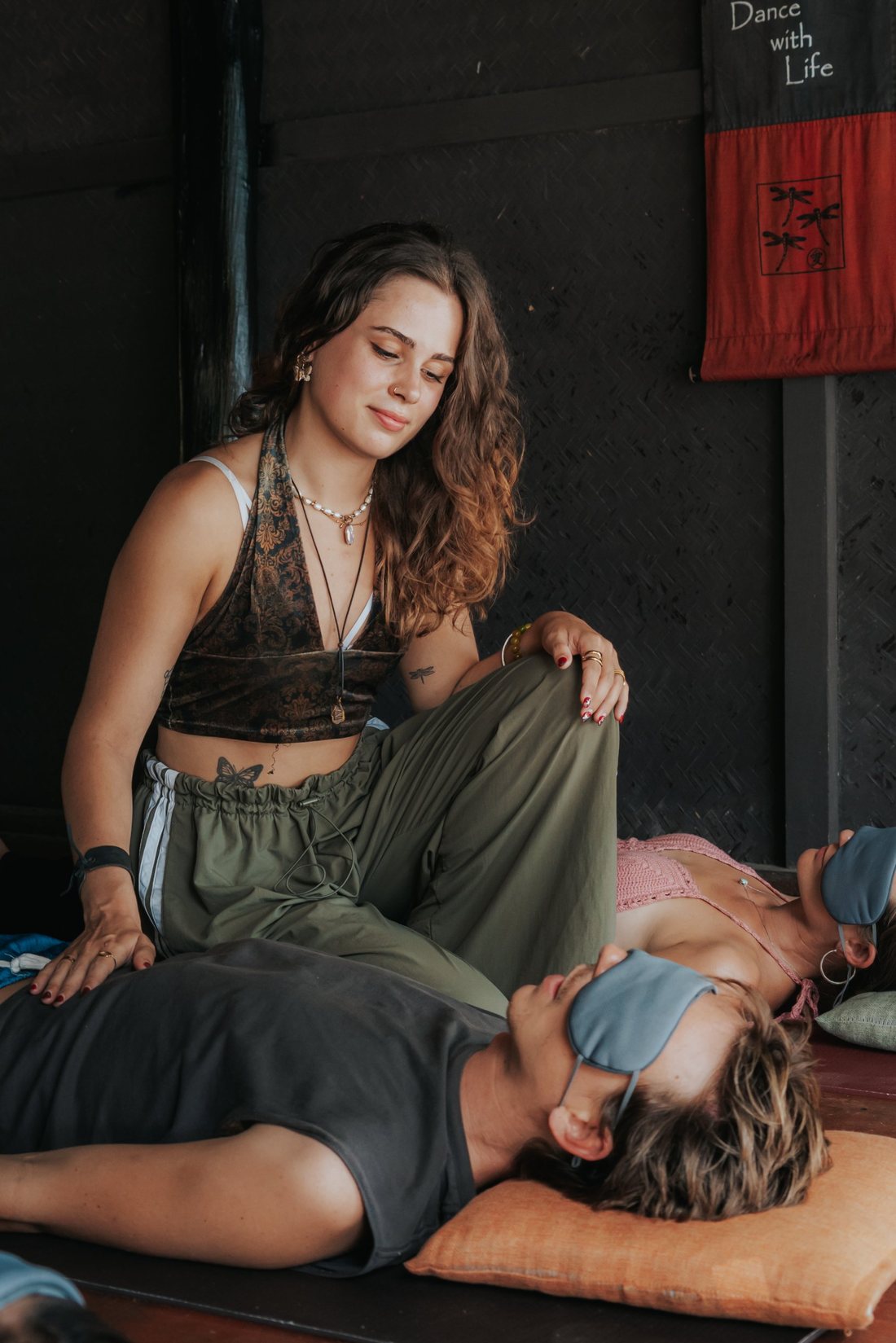
We begin with an introduction to breathwork, what you might experience and the breathing technique itself. Once the breath feels familiar, you close your eyes and let the journey unfold. I stay with you throughout, guiding and supporting where needed, while a carefully curated playlist helps shape the atmosphere of the experience. The active breathing phase usually lasts around 30 to 50 minutes, depending on the session and how the process unfolds.
Afterwards, the breath returns to its natural rhythm and there is time to integrate. If you want to, there is space to share what you experienced. Sometimes feelings or impressions stay for a little while, so give yourself some time. Drink water, eat something, go for a walk, journal, rest or sleep.
Safety & contraindications
Conscious Connected Breathwork can be physically and emotionally intense and may not be suitable for everyone. Please get in touch beforehand if any of the following apply to you:
- Epilepsy or a history of seizures
- Cardiovascular conditions or uncontrolled high blood pressure
- Glaucoma or retinal detachment
- Osteoporosis
- Recent surgery or acute injury
- Neurological or spinal conditions
- Psychosis, bipolar disorder or schizophrenia
- Recent psychiatric hospitalisation, acute emotional crisis or suicidal thoughts
- Pregnancy
Breathwork sessions are offered for personal self-exploration. They are not a form of medical or psychotherapeutic treatment and are not intended to replace either.